

Large Molecule HPLC
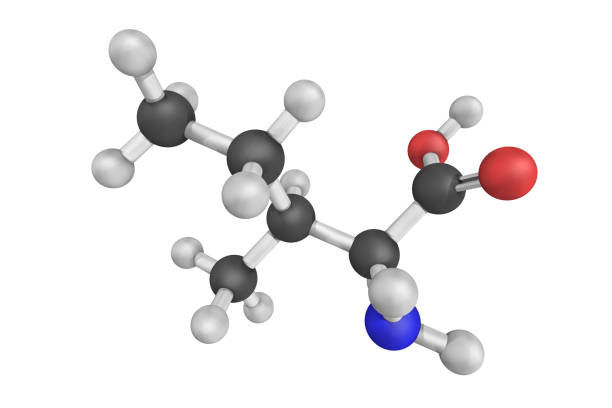
HPLC analysis of biomolecules relies on different modes, such as reversed phase, size-exclusion, or ion exchange, to account for their numerous functional groups and multiple conformations. Regardless of the separation mode used, the key to accurate and reliable biomolecule separation lies in efficient column packing and consistent stationary phase particle chemistry.
REVERSED-PHASE BIOMOLECULE HPLC
In Reversed-phase HPLC (RP-HPLC), a sensitive and adaptable method is employed to separate and analyze proteins, protein fragments, and peptides. RP-HPLC utilizes a non-polar stationary phase along with a polar mobile phase. The retention of proteins and peptides on the stationary phase occurs through adsorption and partitioning principles. Hydrophobic regions of proteins temporarily bind to the stationary phase, and elution takes place by increasing the non-polar characteristics of the mobile phase. The resolution of this technique can be influenced by factors like pore size, particle size, column length, and the hydrocarbon chain attached to the stationary phase.
SIZE EXCLUSION CHROMATOGRAPHY (SEC)
Size exclusion chromatography (SEC) is a chromatographic technique that separates molecules based on their size, specifically their hydrodynamic radius. Unlike other modes, it does not rely on the interaction of the analyte with the stationary phase. Instead, the separation is achieved by allowing the analyte to flow randomly through the stationary phase particles. Higher molecular weight analytes are eluted earlier because they are either fully or partially excluded from the pores of the stationary phase particles. On the other hand, lower molecular weight analytes elute later as they take more time navigating through the intricate path within the particles.
SEC finds applications in characterizing monoclonal antibody (mAbs) aggregates and fragments, estimating unknown protein molecular weights, and determining protein formulation stability.
HYDROPHOBIC INTERACTION CHROMATOGRAPHY (HIC)
Hydrophobic interaction chromatography (HIC) is a chromatography technique that separates analytes based on the level of interaction between their hydrophobic components and hydrophobic ligands on the stationary phase. It is not commonly used for peptide separation due to peptides’ lower molecular weight and reduced tendency to fold.
In HIC, high salt concentrations can disrupt the hydration layers around proteins, allowing their hydrophobic surface regions to interact with the non-polar stationary phase. The choice of salt is determined by the Hofmeister series, which categorizes cations and anions based on their ability to either disrupt protein hydration layers (chaotropic) or promote protein hydration layer formation (kosmotropic). Commonly used salts include ammonium sulfate, potassium sulfate, and sodium sulfate.
Hydrophobic interaction chromatography is currently applied to determine the drug to antibody ratio (DAR) profile of antibody-drug conjugates (ADC).
ION EXCHANGE CHROMATOGRAPHY (IEX)
Ion exchange chromatography (IEX) is a chromatographic technique that separates analytes based on their charge. Proteins and peptides possess both acidic and basic functionalities, including aspartic acid, glutamic acid, cysteine, tyrosine, arginine, histidine, lysine, and terminal α-carboxylate or α-amine groups. IEX is particularly useful for detecting and resolving biotherapeutic charge variants, which may arise from mRNA transcript mistranslation or post-translational modifications like deamidation, oxidation, or glycosylation.
Choosing the appropriate IEX column relies on the analyte’s isoelectric point (pI). If the mobile phase pH is lower than the pI, the analyte will be positively charged and bind to a cation exchange column. Conversely, if the mobile phase pH is above the pI, the analyte will be negatively charged and bind to an anion exchange column.
AFFINITY CHROMATOGRAPHY
Affinity chromatography relies on a particular interaction between the analyte and the ligand on the stationary phase. The goal is to have only the analyte of interest bind to the stationary phase, while allowing other sample components to pass through the column. Subsequently, a second mobile phase is used to elute the analyte.
In the biopharmaceutical industry, Protein A chromatography is the most commonly used form of affinity chromatography. Protein A, a 42 kDa surface protein found in the cell wall of S. aureus, specifically binds to the heavy chain in the Fc region of IgGs, making it an excellent method to separate IgGs from other sample components. Typically, Protein A columns are created by immobilizing the protein on a porous, organic particle. However, a monolithic format for Protein A chromatography has also been developed, allowing for efficient high sample throughput at various flow rates.